Oud Everywhere, But Which Oud?
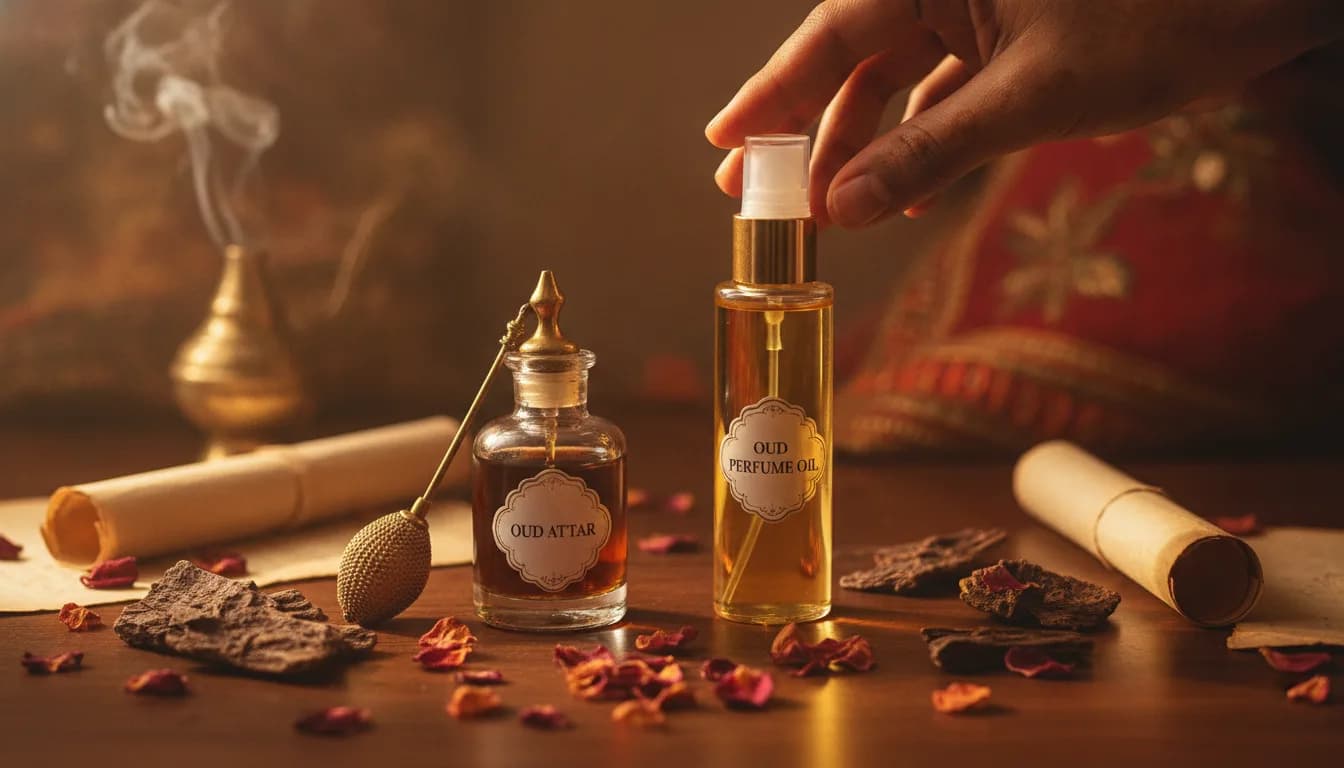
Walk into any fragrance store in India and you'll see oud on everything. Oud attar, oud oil, oud perfume, oud spray. The word gets thrown around so freely it's stopped meaning much. But if you're actually spending money on a concentrated fragrance, the distinction between a traditional oud attar and a modern oud perfume oil matters. Not just academically. It changes how the scent behaves on your skin, how long it lasts, and what you're actually paying for.
Let's break it down without the mystique.
What Is a Traditional Oud Attar?
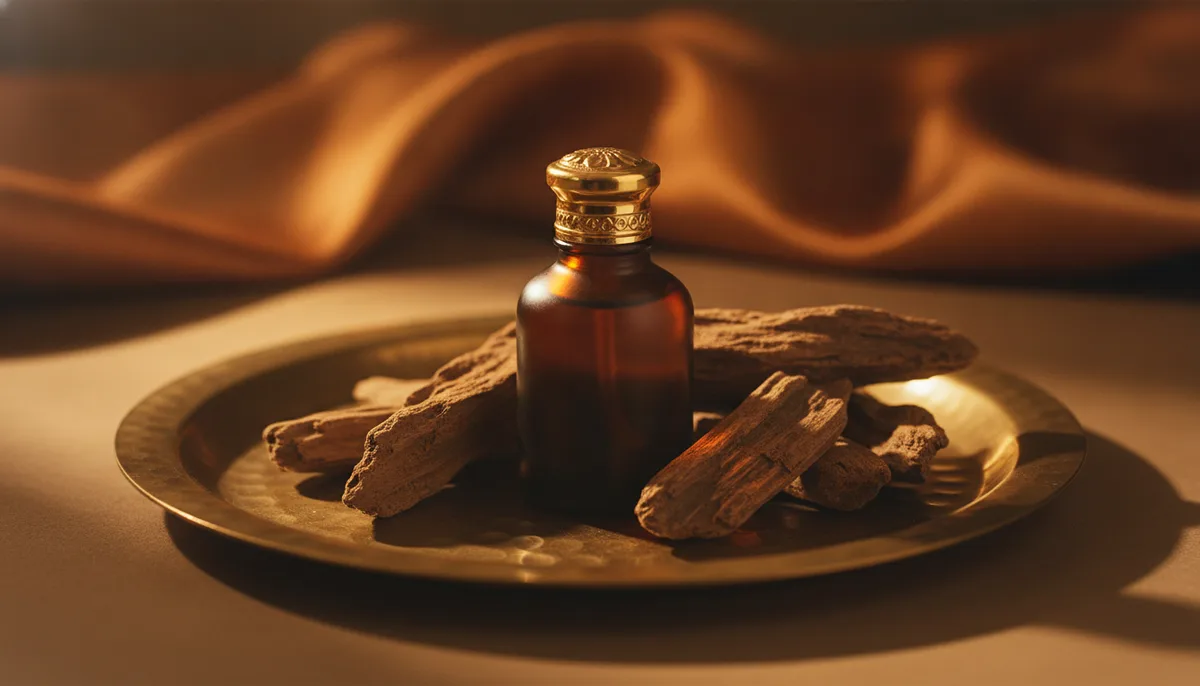
A traditional oud attar is exactly what it sounds like. Oud, also called agarwood, is distilled directly into a base of sandalwood oil through a slow hydro-distillation process called deg-bhapka. The result is a thick, dark oil where oud is the dominant voice and sandalwood is the carrier. No alcohol, no synthetic fixatives, no added top notes. Just the raw material doing its thing.
The smell profile is earthy, animalic, and smoky. Real oud attar can smell almost medicinal or barn-like on first application, especially the Indian and Hindi varieties. It tends to sit close to the skin rather than projecting outward. Longevity is strong because the oil base clings, but the sillage is intimate. The person next to you might not catch it unless they're close.
Cost is the big factor here. Genuine oud attar made from actual agarwood can run anywhere from a few hundred rupees for a diluted blend to several thousand for the real stuff. If you're seeing "oud attar" priced suspiciously low, it's likely a synthetic recreation or a heavily diluted base.
What Is a Concentrated Oud Perfume Oil?
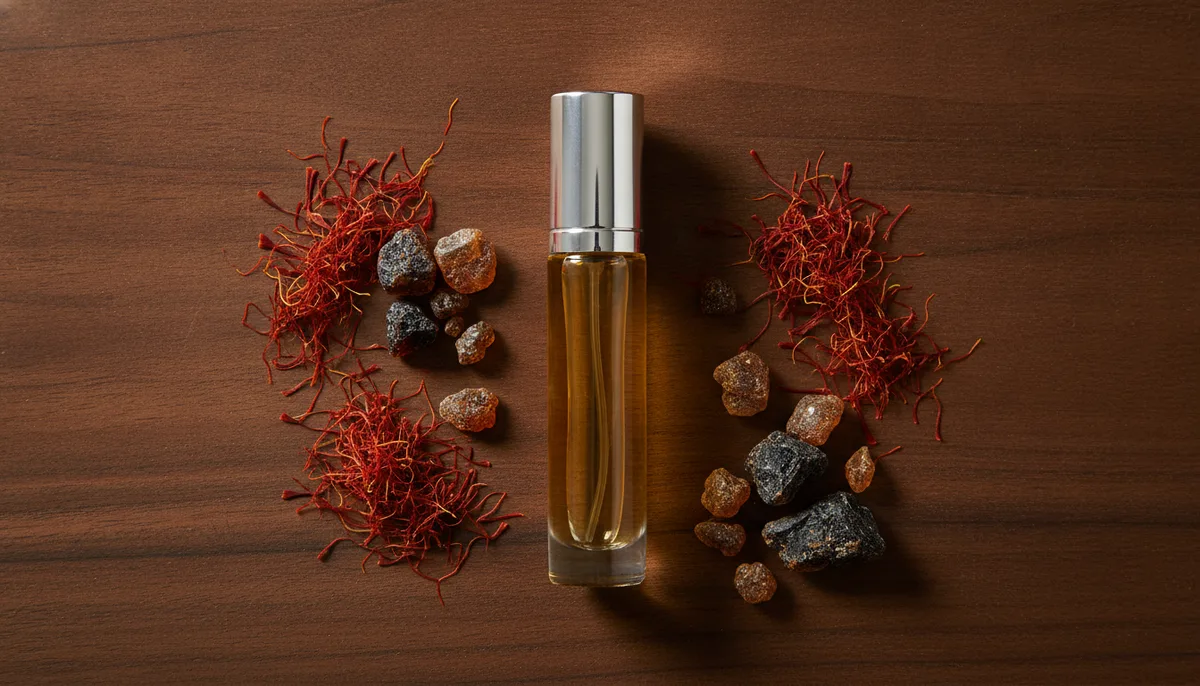
A concentrated oud perfume oil is a modern, composition-based fragrance built around oud as a theme rather than oud as a raw ingredient. A perfumer blends synthetic oud molecules, actual oud extract, and supporting notes like rose, amber, saffron, or wood accords into a carrier oil. The result is more structured, more layered, and usually more wearable for daily use.
This is where modern perfumery meets traditional attar culture. You get the richness of an oil format without the rawness of pure agarwood. The scent has top, heart, and base notes that unfold over time. Projection is usually stronger than traditional attar because the composition is designed to diffuse, not just cling.
A good example of this is Midnight Saffron, which opens with saffron and oud without smelling like raw resin. It has structure. It moves from opening to drydown in a way that traditional oud attar doesn't, because traditional attar is one continuous note rather than a composed arc.
How They Actually Perform Differently
Projection and Sillage
Traditional oud attar projects close to the skin. It's intimate, personal, and builds in warmth over time. Great for people who want a scent trail that's noticeable only when someone is near you. Not ideal if you want a room to register that you've walked in.
Concentrated oud perfume oils are typically designed to project more. The synthetic molecules used in modern compositions like Iso E Super or various oud aromachemicals are built to diffuse. Apply it to your pulse points and you get actual sillage, not just a skin scent.
Complexity Over Time
Pure oud attar evolves slowly because there's not much variation in the composition. You get the opening hit of raw oud, then the sandalwood softens it, then it settles into a warm skin scent. That's the arc and it's a short one.
A concentrated oud perfume oil gives you a proper drydown. The top notes lift off, the heart develops, and the base settles into something different from what you applied. Oud After Dark is a good example of an oud-based oil that has a proper progression, starting darker and smokier before settling into a drier, more resinous finish.
Wearability for Daily Use
Raw oud attar is a commitment. It's polarising by nature because agarwood in its purest form smells animalic and intense. In India, this works beautifully for traditional occasions like Friday prayers, weddings, or festivals where heavier, more serious fragrance is expected. It is less practical for a Monday morning in an air-conditioned office in Bengaluru or Mumbai.
Concentrated perfume oils sit better in daily rotation because they're built for versatility. You control the intensity by how much you apply. A small amount gives a clean, noticeable scent. Build it up for evenings or formal occasions.
Price and What You're Actually Getting
This is where people get confused. Traditional oud attar using real agarwood is expensive because the raw material is genuinely scarce. Agarwood comes from infected aquilaria trees, and natural infection rates are low. The distillation process is slow and labour-intensive. When you're paying for real oud attar, you're paying for a rare agricultural product.
Concentrated oud perfume oils are priced differently because they use a blend of natural extracts and quality synthetics. This isn't a compromise. Modern oud aromachemicals can smell extraordinary and often outperform natural oud in terms of consistency and projection. The perfumer has more control over the final result, which means you get a more reliable fragrance every time.
At Amorvio, all oils are priced around the same range, making it practical to own more than one and rotate based on your mood or occasion, which is how most serious fragrance people actually wear scent anyway.
Which One Should You Actually Buy?
If you want something for religious or ceremonial use, traditional oud attar is the right call. It carries cultural weight, it smells serious, and it performs the way those occasions demand.
If you want an oud-heavy fragrance for daily wear, date nights, office evenings, or building a collection, a concentrated oud perfume oil gives you more flexibility and usually better projection for the price.
If you're new to oud altogether, starting with a composed oud perfume oil is smarter. Raw oud attar can be a shock if you've never worn it before. Something like Velvet Oud gives you the oud character in a smoother, more approachable format. The oud is central but it's supported by notes that make it easier to wear without previous attar experience.
And if you want oud with a twist rather than oud as the main show, Midnight Saffron layers saffron into the equation, which gives you the depth of oud with a spiced, warm opening that shifts the whole character of the fragrance.
The Short Answer
Traditional oud attar is a raw, intimate, agriculturally derived product. Concentrated oud perfume oil is a composed fragrance that uses oud as a central note within a broader structure. Both are legitimate. Both have a place. What matters is knowing which one matches what you actually need from a fragrance.
If someone tells you one is more authentic than the other, ignore them. The best fragrance is the one that works for your life, your skin, and the situations you wear it in. Everything else is just classification.