Why the Label Matters More Than the Marketing
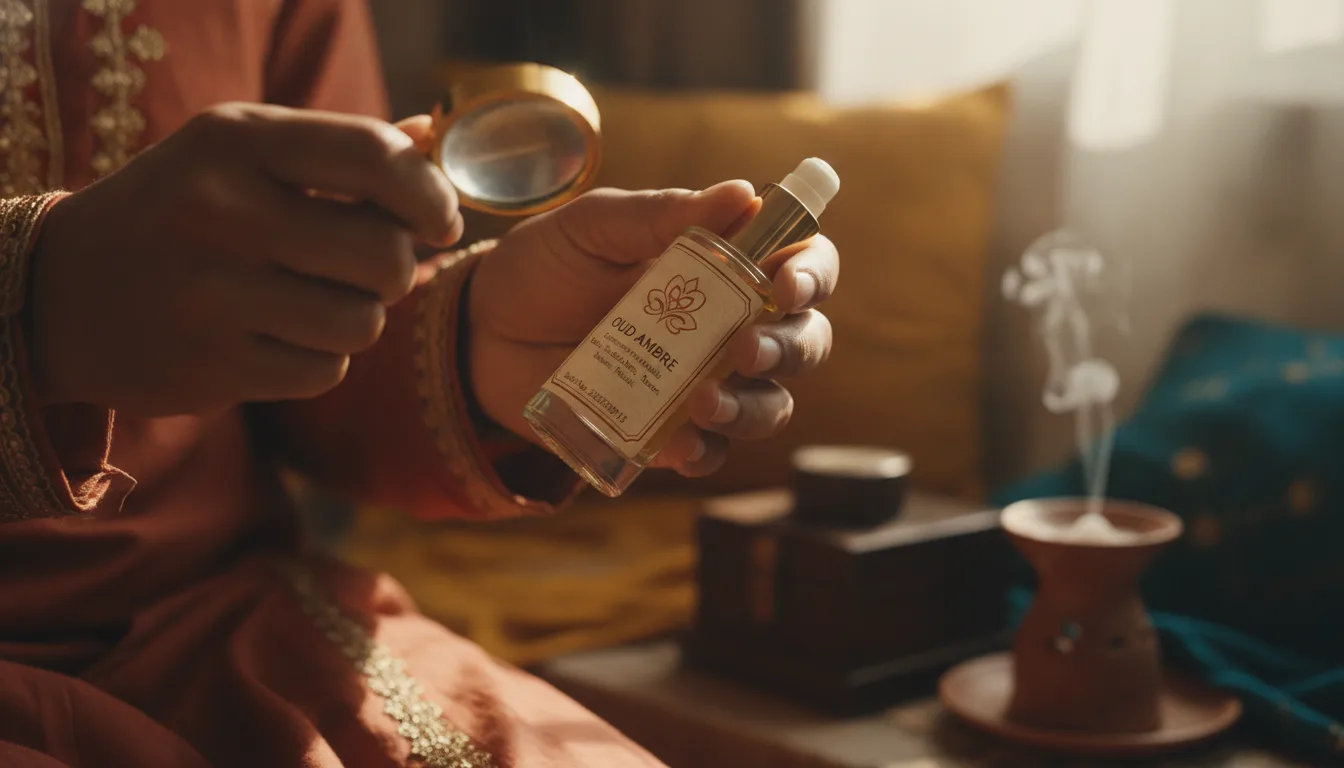
Most people smell a tester, like it, and buy. That works fine in a store where you can sniff before spending. But when you're shopping online - or picking up a bottle at a shop with aggressive sales staff - what's printed on the bottle is the only honest information you have. The label doesn't have a motive. It can't tell you it smells like a Rolls-Royce showroom. It just lists what's in the bottle.
Learning to read that label takes five minutes and saves you from buying something that smells nothing like what you expected. This guide covers what every line on a perfume oil label actually means - the note list, concentration, fragrance family, batch codes, and the stuff brands quietly leave off.
The Note Pyramid: What It Actually Tells You
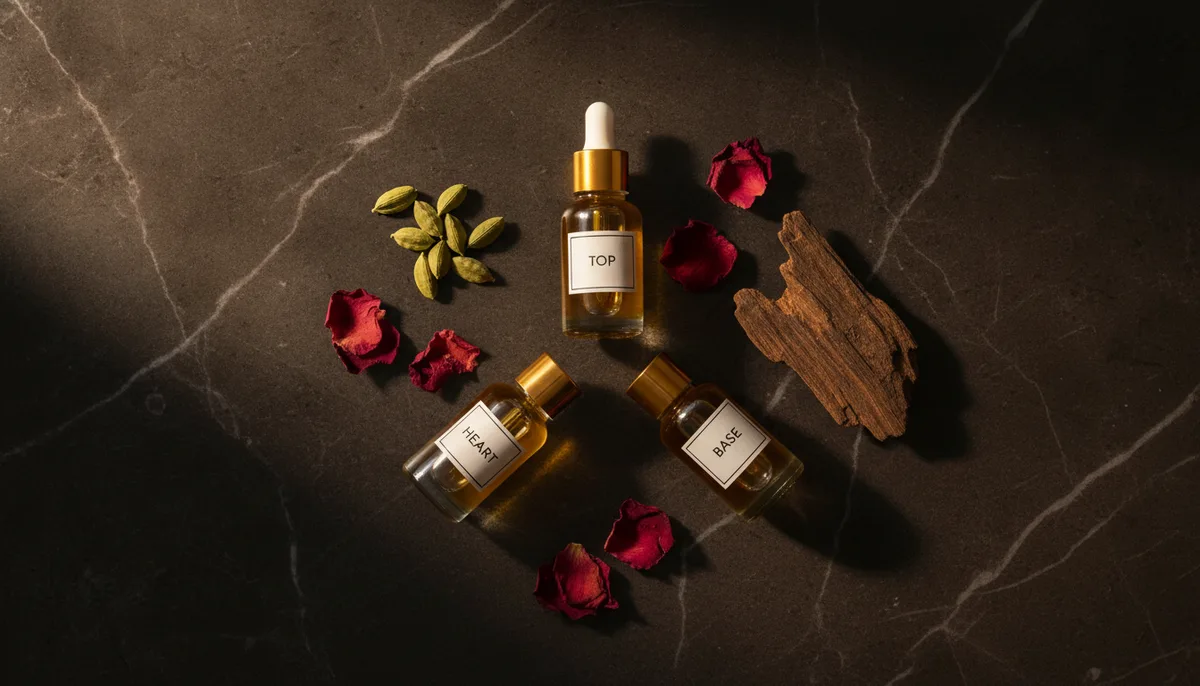
Almost every perfume oil lists its notes in three tiers: top, heart, and base. These aren't ingredients exactly - they're the phases of how the scent unfolds on your skin.
Top Notes
These are what you smell first, usually in the opening thirty seconds to five minutes. Common top notes are citrus (bergamot, lemon, orange), light herbs (basil, cardamom), and some spices. They're the loudest and shortest-lived part of a fragrance. If a bottle leads with bergamot and you're judging the scent purely on a five-second sniff, you're only smelling the packaging, not the perfume.
Heart Notes
The heart is the core of the fragrance - what the scent actually is. Rose, jasmine, oud, tobacco, saffron - these sit in the middle. They emerge after the top notes fade and they last for hours. When a label says "heart: saffron, amber" that's the scent you'll be wearing at lunch if you applied it in the morning.
Base Notes
These are the foundation - the long drydown that stays on skin and fabric. Musks, sandalwood, vetiver, patchouli, and oud all commonly anchor a base. Base notes are what people smell on you four to six hours in. They're also what defines whether a scent feels cheap or rich. A base note of synthetic musk is very different from one of aged oud or smooth sandalwood.
When you're reading any note pyramid, mentally skip the top notes and focus on what's in the heart and base. That's your fragrance.
Concentration: The Number That Changes Everything
Perfume oil is different from an EDT or EDP spray because it doesn't carry alcohol. But even within perfume oils, concentration varies. Some bottles contain pure undiluted oil. Others are blended with a carrier like fractionated coconut oil or jojoba, which dilutes the concentration but also makes the formula gentler on skin and easier to apply.
What to look for on the label:
- Pure/neat/undiluted - means you're getting the raw concentrate. A single application goes a long way. These are often stronger, last longer, and require only one or two drops per pulse point.
- Diluted with carrier oil - the label should state the carrier and, ideally, the ratio. A 20% concentration in jojoba behaves very differently than 80% concentrate. If neither the carrier nor ratio is listed, that's information worth asking about before buying.
- Roll-on vs dropper - this isn't about concentration, but it affects how much product you use. Roll-ons tend to deposit more oil per application than a dropper. Keep that in mind when comparing prices by volume.
Amorvio's concentrated perfume oils are designed to deliver real performance - not watered-down output - which is why a 10ml bottle punches far above its price relative to most spray EDPs at three times the cost.
The Fragrance Family Claim: Is It Accurate?
Bottles usually carry a label like "Woody," "Oud," "Gourmand," or "Spicy." These are useful shorthand but they're not binding definitions. A bottle labeled Woody might be 70% floral with some sandalwood underneath. Read the notes alongside the family claim.
A genuinely woody fragrance should show wood-dominant notes in both the heart and base - sandalwood, cedarwood, vetiver, or oud. If the base is all musk and the top is citrus, calling it woody is a stretch.
Some examples from Amorvio's catalog that actually match their family claims:
- Quiet Prestige is listed as Woody and the drydown backs that up - creamy sandalwood and vetiver anchor the base without anything muddying the family profile.
- Midnight Saffron sits in the Oud family with saffron doing the heavy lifting in the heart - warm, slightly medicinal, the way real oud-forward blends work.
- Moonlit Coffee is Gourmand - coffee and warm sweetness, no pretense about being a fresh citrus or a clean musk. It smells like what it says.
Batch Codes and Manufacturing Dates
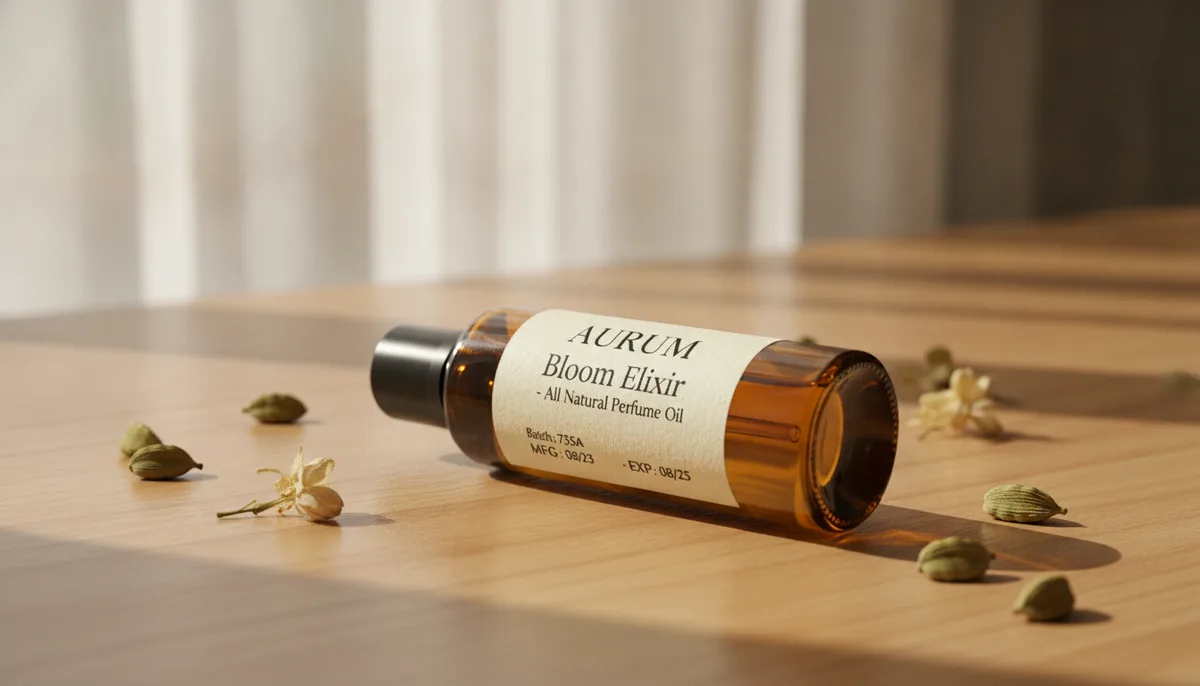
This is the part most buyers ignore completely and shouldn't. Perfume oils don't expire the way food does, but they do degrade over time - especially if they've been stored poorly (exposed to heat or light). A bottle that's been sitting in a warehouse or a shop shelf for two years will smell different than a fresh batch, particularly in the top and heart notes which are more volatile.
What to check:
- Manufacturing date or batch code - a responsible brand will print either the date of manufacture or a lot code that can be traced. If there's nothing on the bottle that identifies when it was made, that's a flag.
- Best before / PAO (Period After Opening) - the PAO is the symbol that looks like an open jar with a number inside, like "24M." That means 24 months after opening. For most concentrated oils, this is 12-36 months depending on ingredients. Naturals (real oud, rose, sandalwood) can last far longer. Synthetics can be more variable.
- Storage instructions - look for "keep away from direct sunlight" or "store in a cool, dry place." Not every brand lists this, but the ones who care about product quality usually do.
What a Good Label Leaves Off (And Why That's a Problem)
Some labels are suspiciously sparse. No note list. No concentration info. Just a name and a barcode. That's not minimalism - that's a brand betting on packaging and marketing to do the selling instead of the product itself.
The minimum you should expect on any perfume oil label:
- Fragrance name and brand
- Volume (ml)
- A note list (even a rough one)
- Concentration or carrier info if diluted
- Country of manufacture
- Batch code or manufacturing date
- Contact or brand information
If a bottle is missing more than two of these, buy with caution or ask the seller directly. Any legitimate brand will be able to answer questions about concentration and manufacturing date without hesitation.
Applying What You Know at the Point of Purchase

Next time you're looking at a bottle - whether it's a new Smoked Desire or something you found at a local attar shop - run through this quick mental checklist:
- What are the heart and base notes? Does the family claim match?
- Is this pure oil or diluted? With what, and at what ratio?
- How old is this batch?
- Is there enough label information to trust the brand's transparency?
None of this takes long. But the habit of reading a label properly means you stop buying blindly on hype or a salesperson's pitch, and start buying based on actual information. That's how people who know fragrance shop - not gatekeeping, just paying attention to what's already printed on the bottle.